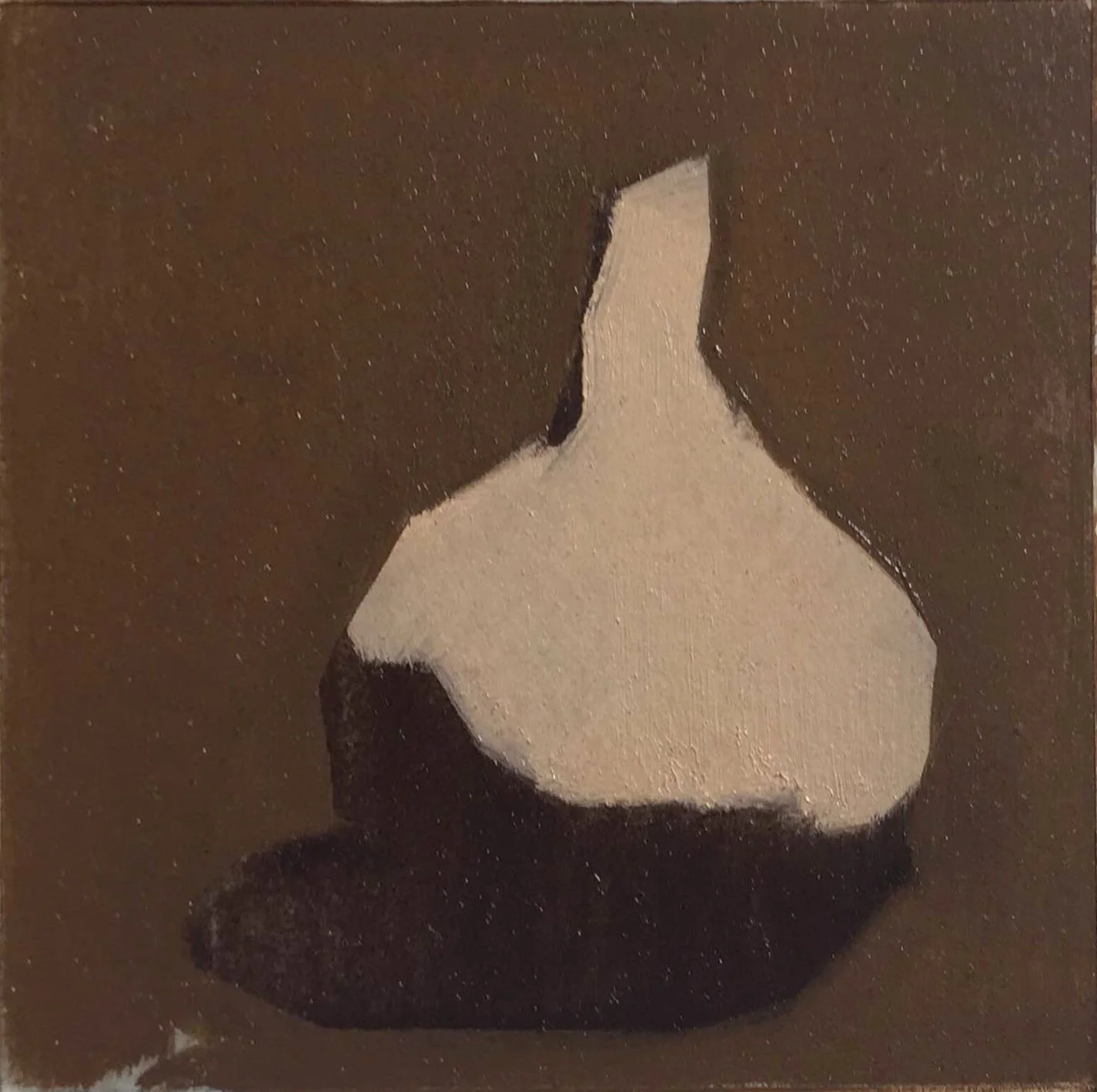
The Big Picture Quick Sketch
Please read through to the end before you begin (like a baking recipe)
The goal of this assignment is to teach you how to start well. To immediately see and record the big picture truths and set yourself up for an accurate painting.
*Watch the demo video included in this lesson.
You will need:
A surface to paint on, I used a 12”x16” piece of Arches Oil paper. If you use a different less absorbent surface you do not need to oil it, simply tone it with the paint and odorless mineral spirits (OMS).
A support for the oil paper if you’re using it
Artist tape
Brushes, I use long flat bristles in small sizes 1-4
Oil paint in the Zorn Palette: Cadmium Red, Yellow Ochre, Titanium White , Ivory Black
OMS
Oil medium like walnut, linseed etc (only needed for the Arches Oil Paper)
A container for OMS, and a smaller container for the oil medium if you need it. To make the oil medium mix approx. 50/50 oil and OMS.
Paper towels or rags
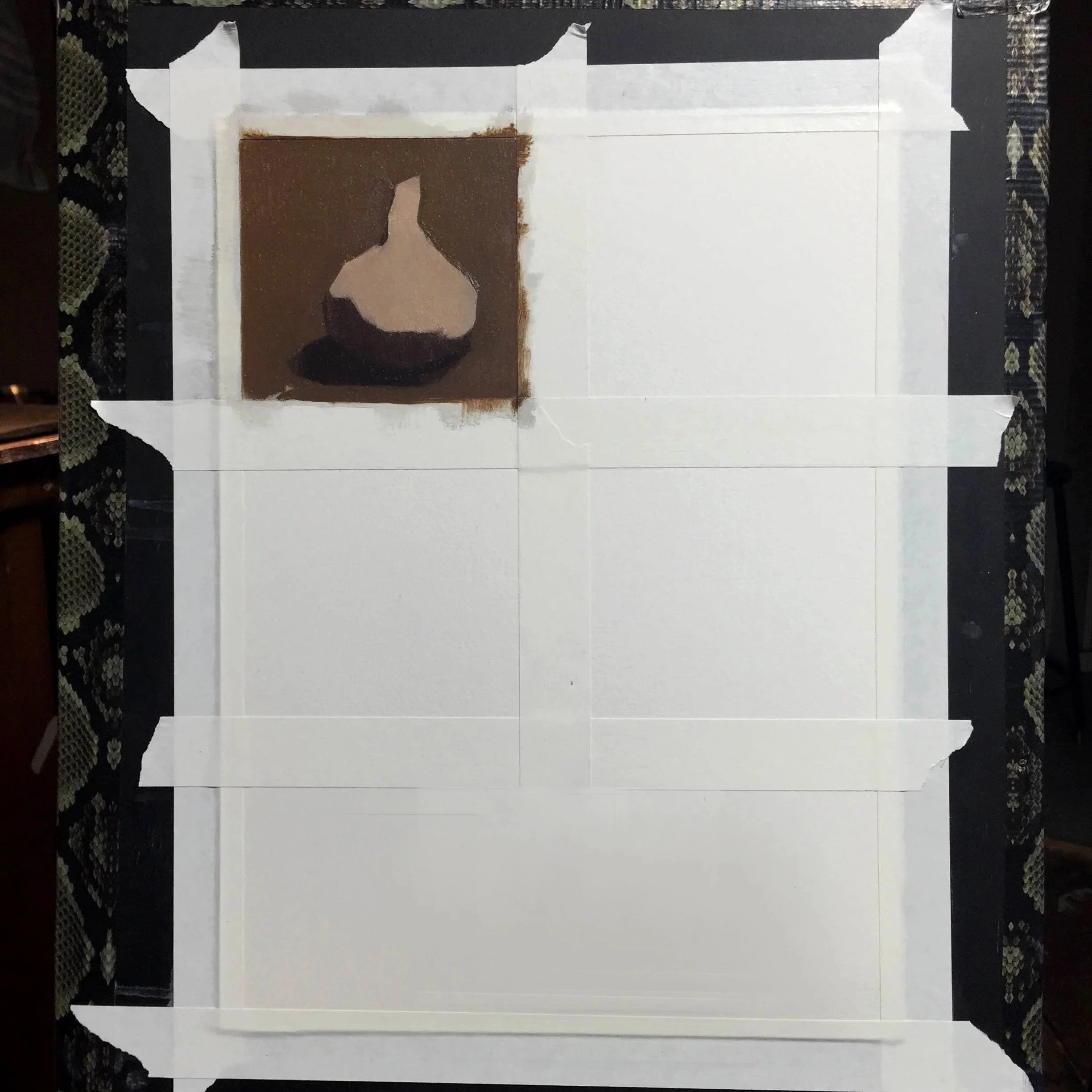
Instructions
Take your painting surface and
tape off 5 sections, the bottom being largest. (see image above).
Choose a different object to paint in each of the top four sections. I chose garlic for the first, the next could have been anything else that fits the Zorn Palette (potato, onion, sauce pan, butter, etc)
In the bottom section, paint two or three of the objects from the top four sections together in one scene/composition.
Paint from life.
Paint no longer than 3 hours. Spend 25 minutes on each of the first 4 objects/sections, the fifth multi object study will take the remainder of the 3-hours allotted to this exercise.
Light your objects with a single, strong light source.
Let’s Begin!
Follow the photo examples and the following instructions together.
I wash my paper with my 50/50 medium made with OMS, the oil, and a tiny bit of black paint before I begin- this makes the paper a bit less absorbent (easier to make corrections). Toning down the white with a neutral tone also makes judging values/colors easier at the beginning.
Photo example 1: You are drawing with paint - separating the subject into only two values, dark and light. Mix the average dark color/value for the form shadow (shadow on the form) and cast shadow (shadow cast by the form), then use it to draw out your object separating light from dark in only two values without filling in any shapes. Tips: Squinting or blurring your vision at the subject will help you decide how to separate any mid values into either the light or the dark.
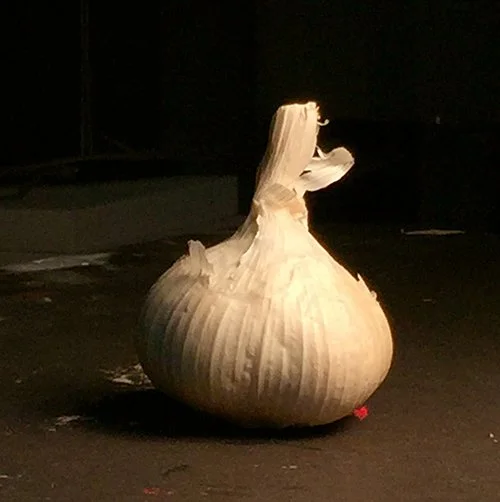
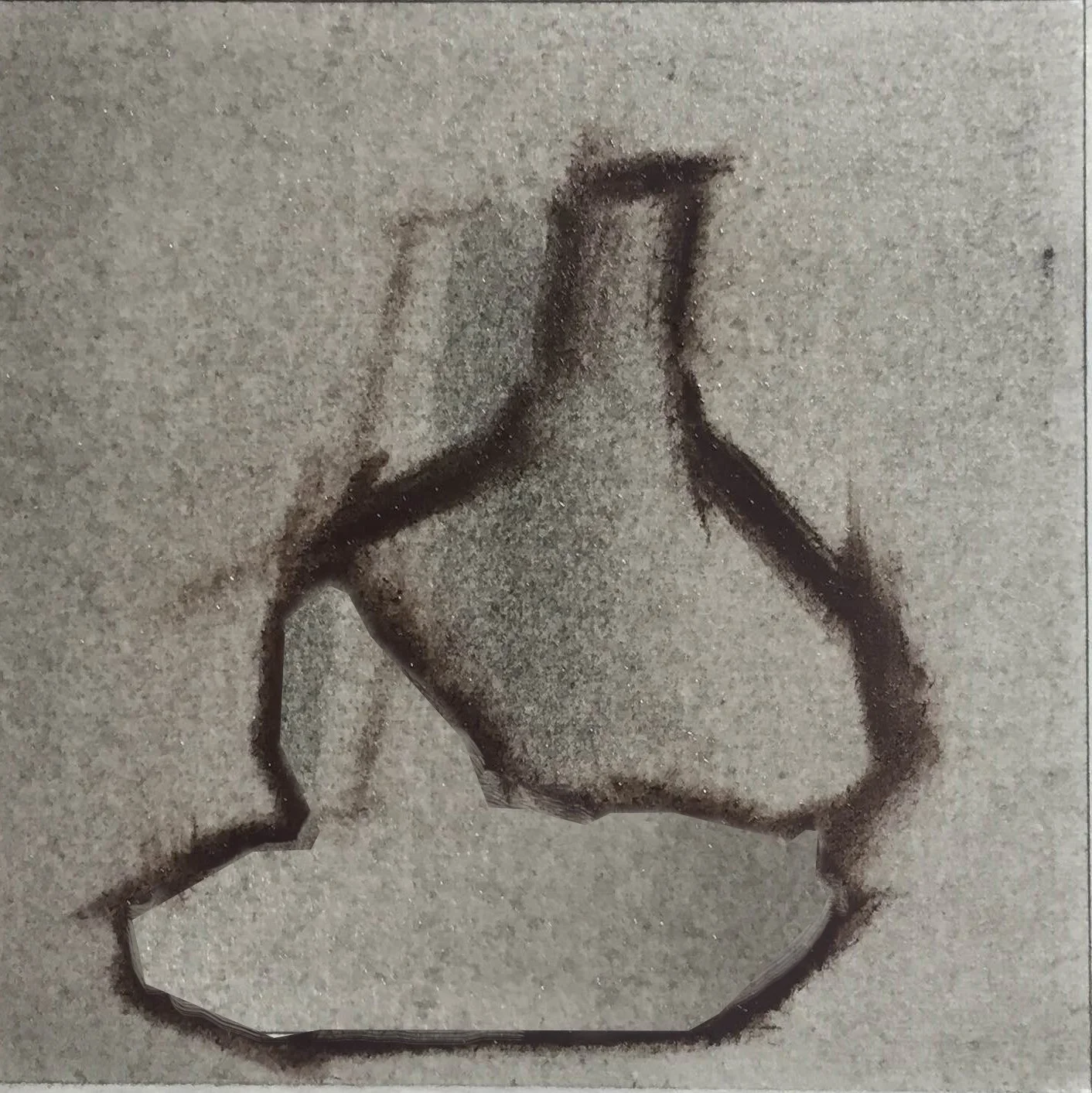
Photo example 2: Then use that same color/value that you drew with to simply fill in your darks. If you find that the color/value doesn’t look correct as you start to fill in, adjust before you proceed.
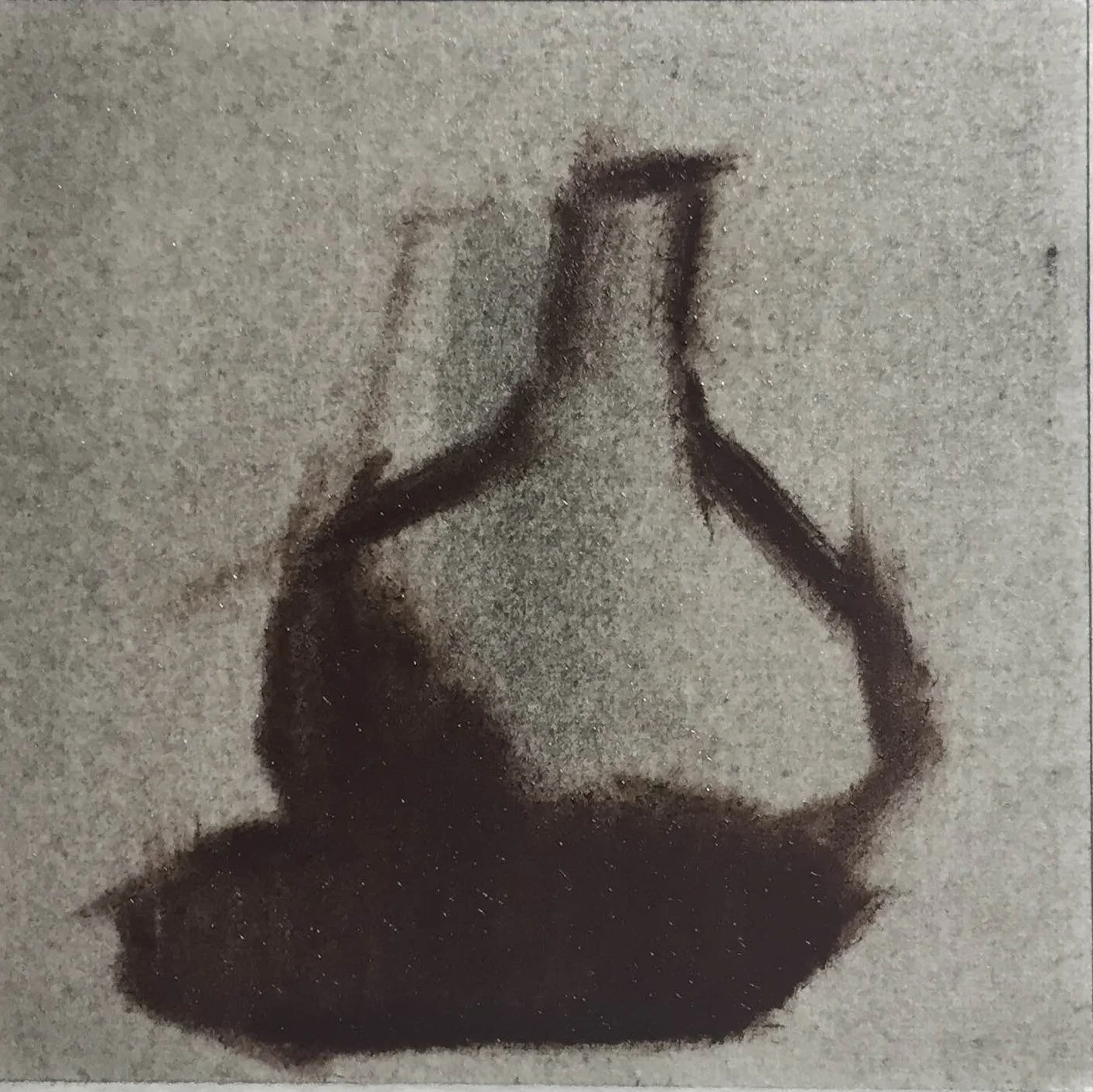
Photo examples 3 : You want to take your time to find the accurate average color/value for the lights, squint squint squint! It took me four tries here, that is how carefully I choose as I’m painting. After you are satisfied with your choice fill in the average light color/value. Use this opportunity to fine tune your drawing if need be as you bring the color up to the edges of the other shapes/values.
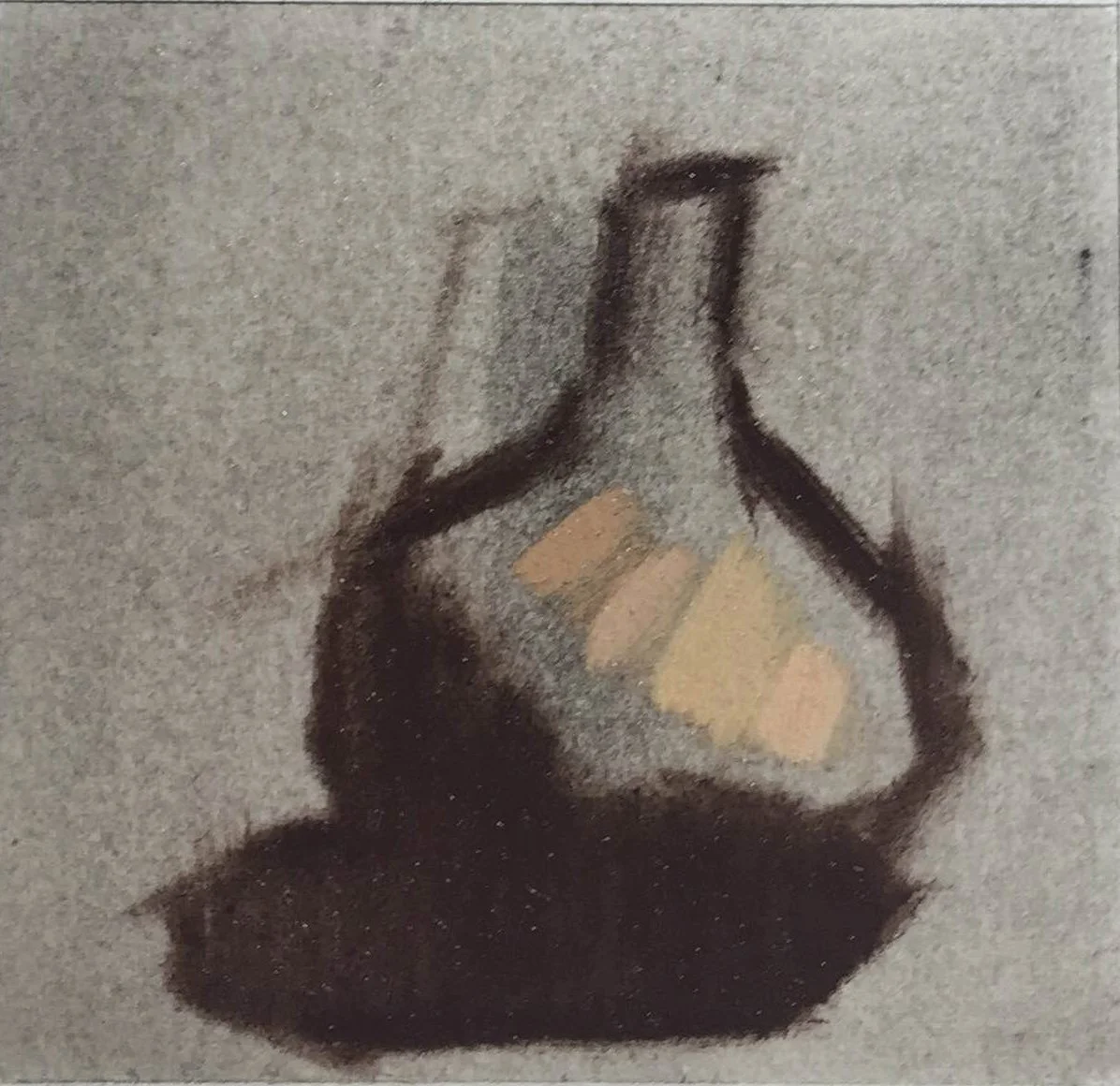
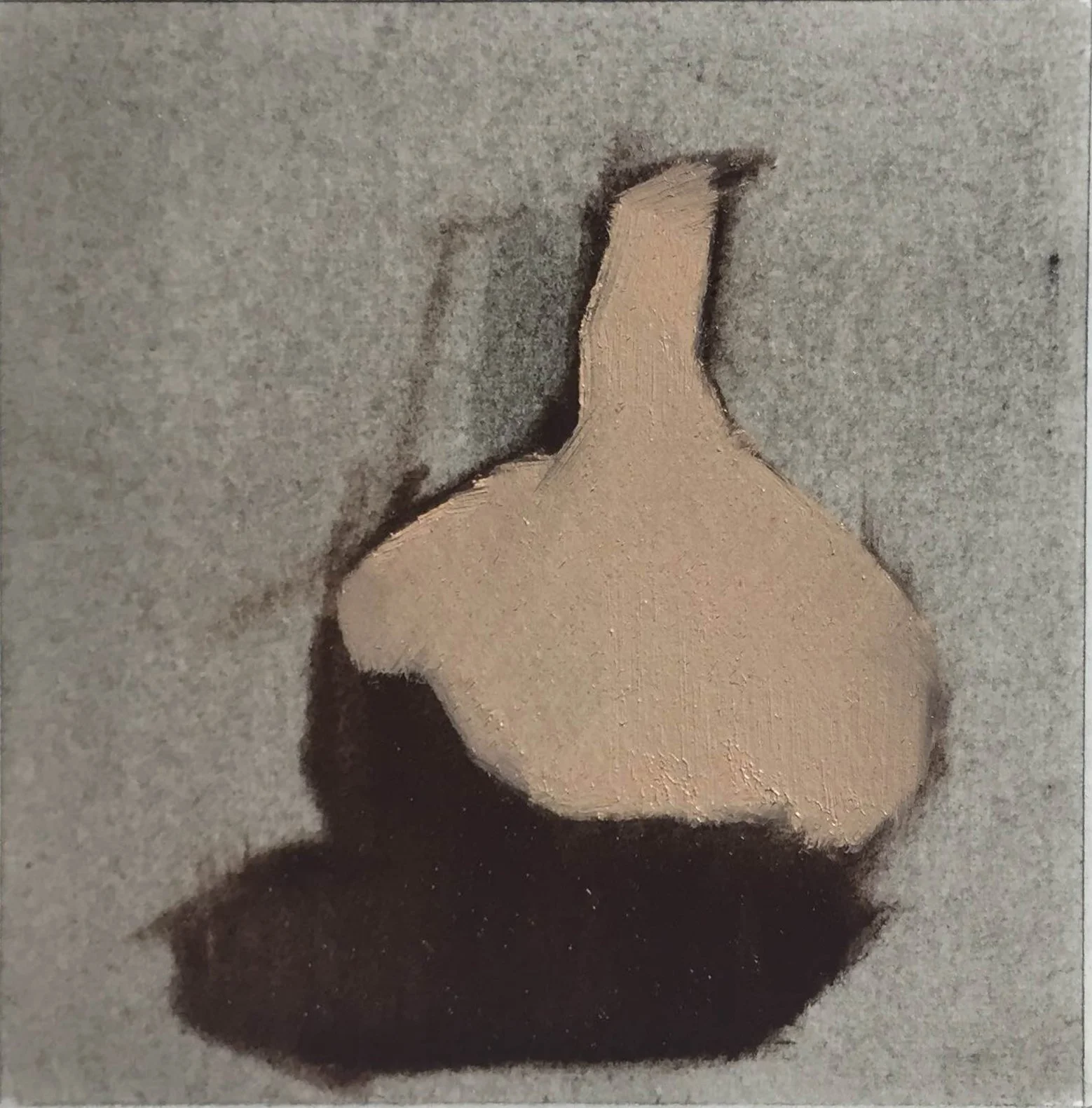
Photo example 4: Fill in the background color, keep it abstract. You may have more than one depending on your set up. Go for accurate value and color please.